
Brownsburg City Directory Sources
No verified standalone Brownsburg street-directory run appears on the Indiana State Library's Hendricks County holding list. That is an important finding, not proof that no useful city directory material survives. Searchers can still use statewide gazetteers, nearby county directory runs, local digitized items, newspapers, maps, yearbooks, and obituary indexes. Each collection answers a different question and carries its own date limit.
| Collection | Years | Where Held | Access |
|---|---|---|---|
| R. L. Polk Indiana gazetteers | 1880-81 and 1882-83 | Internet Archive and Indiana State Library | Free scans online |
| Robinson Plainfield directories | Selected years, 1960-1990 | Indiana State Library list | Check repository holdings |
| Brownsburg local history | Dates vary by item | Brownsburg Public Library | ContentDM, catalog, desk help |
| Obituary and biography index | About 1918-2019 | Brownsburg Public Library | Free index online |
| Indiana Room county collections | Multiple 19th and 20th century runs | Plainfield-Guilford Township Library | In-library and staff-assisted access |
Begin with the source closest to the date. A statewide gazetteer is useful for an 1880s public role. A later family question may call for a yearbook, newspaper, census, deed, or obituary. When a catalog does not show Brownsburg in its title, ask staff about Brown Township, Hendricks County, telephone books, and uncataloged local files.
Brownsburg's Gazetteer City Directory
The strongest digitized early directory lead is the 1880-81 R. L. Polk Indiana gazetteer. Its Brownsburg entry describes a town of about 800 people, four churches, a graded school, a drain-tile factory, two sawmills, a chair factory, and a flour mill. It names the postmaster and people tied to medicine, retail, law, lodging, and trades. Those names are dated civic or commercial evidence, not a list of every household.
The Indiana State Library gazetteer guide spans Indiana publications from 1849 through 1928-29. A second Brownsburg lead is the digitized 1882-83 volume. Search the town heading, then try surname spellings and business terms in the scan's OCR. Always save the volume title, year, page, and town heading.
See the actual digitized gazetteer viewer before relying on OCR alone.
The scan lets a researcher verify page context, typography, and neighboring entries that a text search may miss.
Read Brownsburg Directory Entries
A true city directory and a gazetteer do not carry the same fields. Later directories may list a surname, given name, spouse in parentheses, work, street address, and coded marks. The inspected Brownsburg gazetteer instead gives a town sketch and selected public or business names. It does not supply street numbers, spouses, complete households, owner marks, or current status.
| Name | Copy spelling, initials, title, and nearby same-name entries. |
|---|---|
| Role | Record the trade, public post, business, or institutional tie exactly as printed. |
| Place | Keep town, county, township, railroad, and post-office labels. |
| Address | Do not add one if the source gives none. |
| Date | Treat the publication year as a dated clue, never present status. |
- Criss-cross directory
- A volume arranged by street and house number, so an address leads to a listed occupant.
- Householder index
- A name list focused on household heads or listed adults rather than every person at an address.
- Abbreviation key
- The volume's own guide to short forms and symbols. Read it before interpreting an entry.
Photograph or save the title page and key with the entry. That small habit prevents a mark from being mistaken for an owner, a widow, a workplace, or a residence.
Brownsburg City Directory Desk
The Brownsburg Public Library local-history desk is the best first contact for a Brownsburg newspaper, photograph, biography, or obituary. The library is at 450 South Jefferson Street and can be reached at 317-852-3167. Its local-history page links the Brownsburg: Then and Now digital collection, a catalog browse, and an obituary and biography index.
Open the library's local-history source alongside the city directory search.
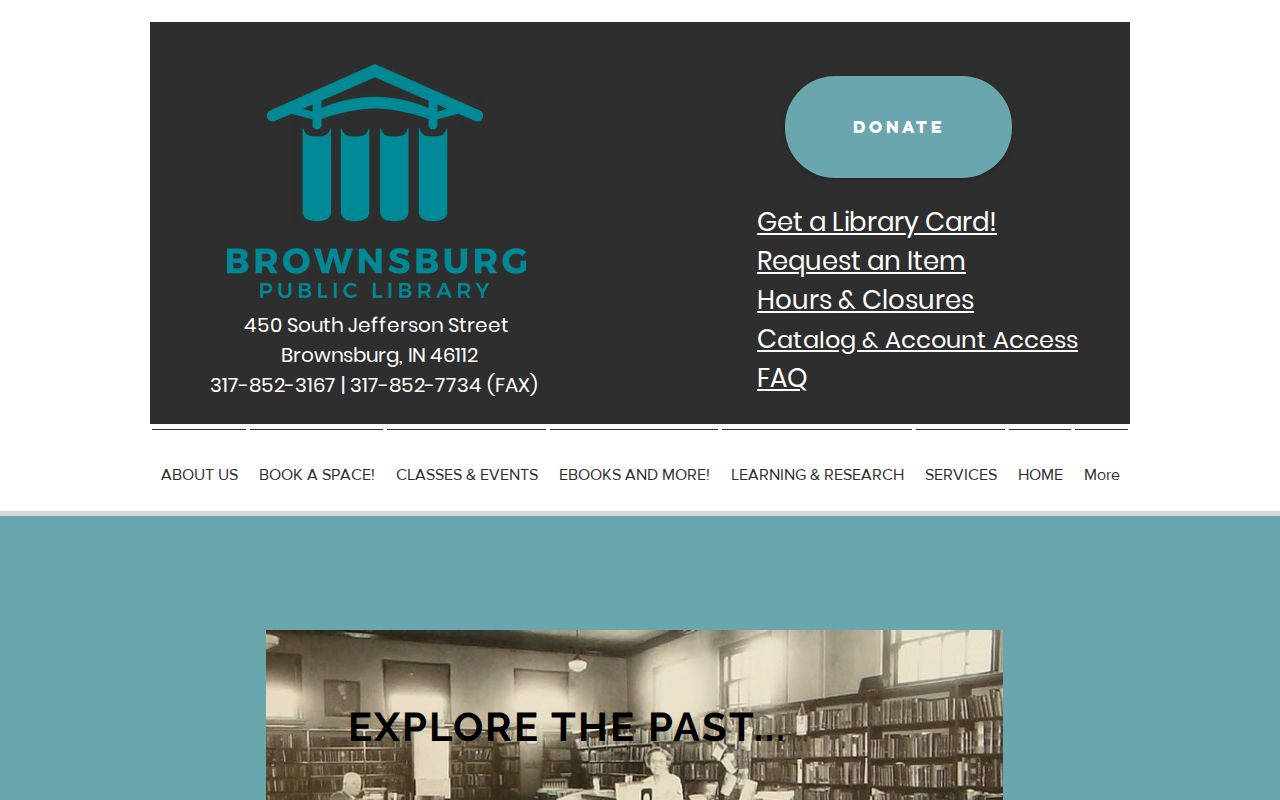
The page makes the access chain clear: digital items help discovery, while staff and catalog records can reveal material that a web keyword search misses.
The library also links the Brownsburg: Then and Now collection. Search by a family name, business, school, street, or event, then preserve the item identifier and date. A photograph caption or obituary index hit is a lead. Confirm the person with the underlying item and another dated record.
The digitized collection can be viewed through its ContentDM search.
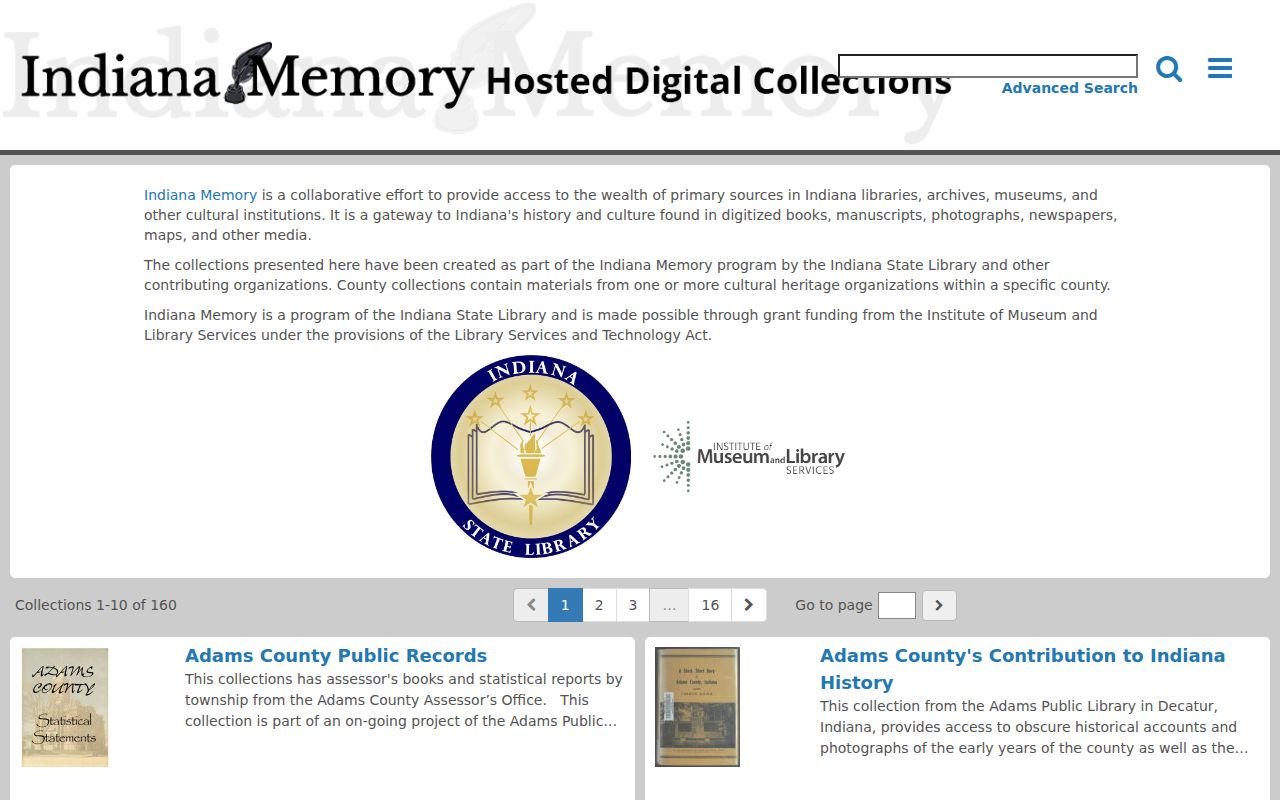
Item dates and captions help bridge gaps between printed directory years without implying a complete resident roll.
Brownsburg Records in Indiana Room
The Plainfield-Guilford Township Library Indiana Room broadens a Brownsburg city directory search to county sources. Its holdings include business directories from 1868 and 1885, newspapers, obituaries, yearbooks, maps, plat books, atlases, Sanborn material, house histories, cemetery records, military files, naturalization records, marriages, divorces, family files, and county indexes.
Review the Indiana Room holdings page before a research visit.

The breadth of those holdings matters when the desired year is absent from a directory list. A map, newspaper notice, marriage index, or yearbook may place the same person in Hendricks County.
Ask which items are open shelf, indexed, digitized, licensed for in-library use, or available only with staff help. Save a call number and page or item number. The collection list may be incomplete or still in progress, so a direct question about Brownsburg, Brown Township, or a family surname can work better than a narrow catalog query.
Brownsburg Directory History Milestone
Brownsburg's library story gives local records a useful timeline. The town organized a library effort in 1916. Carnegie support of $12,500 followed, the cornerstone was set on September 18, 1917, and the early library opened with about 400 books. Ottie Roberts served as librarian through 1944. Those facts explain why library, school, newspaper, and civic sources become especially useful in the early twentieth century.
| 1879 | Rail service adds a transport label that may appear in older records. |
|---|---|
| 1910 | Commuter service supplies more context for town and county references. |
| 1916 | The local library effort is organized. |
| 1917 | The Carnegie-era cornerstone and civic institution become dated research anchors. |
Older material may say Brown Township, village, railroad community, or Hendricks County instead of modern Brownsburg. Search all of those labels. A modern municipal boundary should never be projected backward without a dated map or record.
Note: The Town of Brownsburg is the official municipal style, even though this project groups it with city directory resources.
Brownsburg Municipal Directory Limits
The town's current staff directory names offices and public employees, but it is not a residents directory. Council and planning packets may name applicants, owners, parcels, or speakers tied to one dated matter. The permit portal is meant for account workflows, and a stable public address search was not verified. Keep those records separate from historic household evidence.
When a defined town record is not online, use the Clerk-Treasurer public-record request route. State the record type, date range, parcel or project number, and subject. Do not ask the town to create a new city directory or infer a private household list.
The official request links are visible on the Town quick-links page.
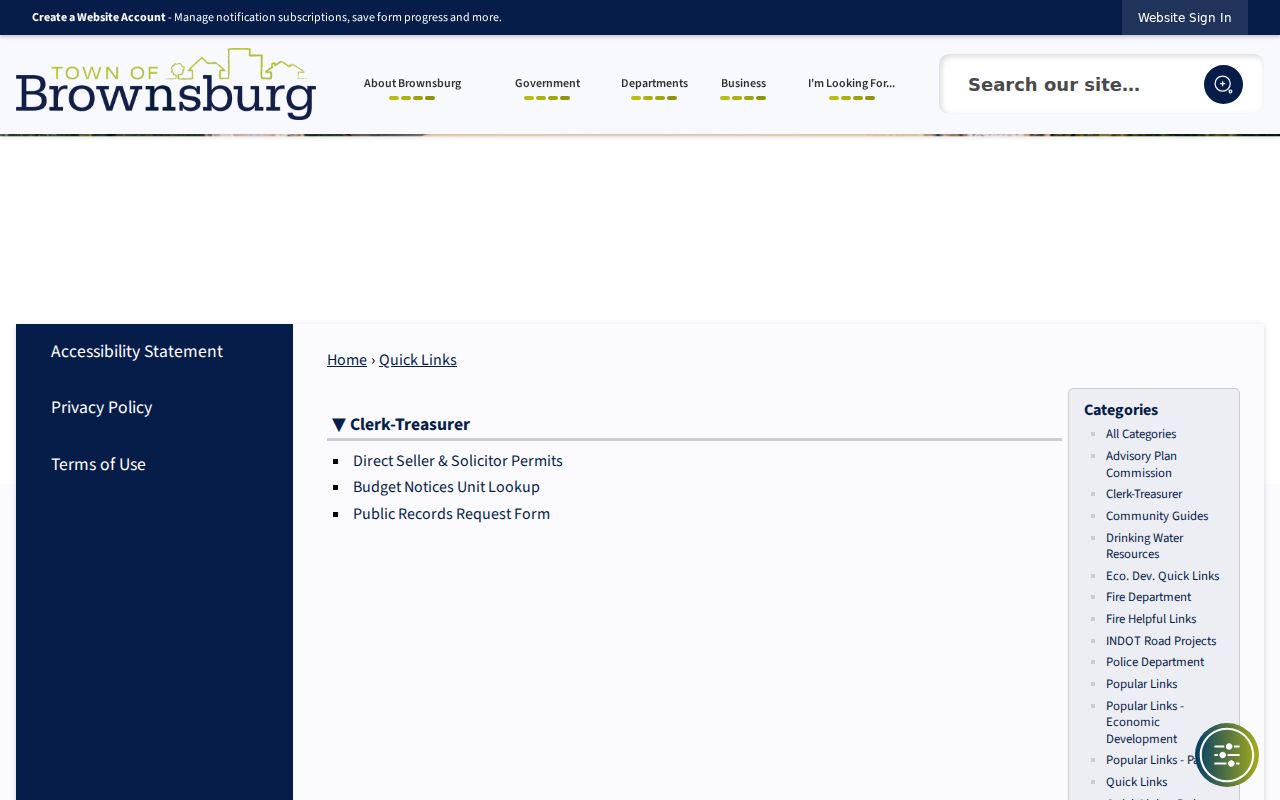
This fallback is useful for a known agenda, permit, inspection, or municipal file, not for a broad list of private residents.
Trace Brownsburg City Directory Families
A city directory find becomes much stronger when it is tested against records from the same period. Keep the exact spelling and initials. Note whether the source describes a person, a business, a public role, or a whole household. Then move one year or one record set at a time.
- Locate the first dated entry and save its full citation, including volume, year, page, and town heading.
- Search nearby years for spelling changes, moves, changed roles, and other people with the same surname.
- Compare the entry with the public federal census closest in time, remembering that a census is one enumeration date.
- Use a deed, plat, newspaper, yearbook, marriage, obituary, or probate record to test the identity and place.
- Stop at the last supported date. Mark missing years instead of treating silence as proof of a move or death.
The Brownsburg previous residents trail takes an address backward through deeds, transfer cards, maps, and dated household sources. Use that method when the question changes from reading the collection to finding who lived at one place.
Disappearance from a volume can mean many things: a publication gap, an omitted name, a move, a death, a changed surname, or a different place label. The Brownsburg obituary index and county probate sources can test the last two possibilities. A modern property or court row can help with a later person, but it cannot by itself identify the subject of an old city directory entry.
Keep a simple citation log for every Brownsburg city directory lead. Include the repository, collection title, publisher when shown, year, page or image number, search term, and access date. For a newspaper, add the paper title and issue date. For a digital image, retain its item identifier and caption. These details make it possible to revisit an uncertain reading and distinguish two people who share a surname.
When two sources conflict, prefer the record closest to the event, then check the role each source was made to document. A deed records a transfer. A census records an enumerated household. A gazetteer selects public and commercial names. An obituary reports a life through a later notice. Agreement across those distinct sources is stronger than repeated copies of the same index.