
Brownsburg Previous Resident Sources
The best starting record depends on the age of the Brownsburg address. Recent ownership can begin with the county property portal and Recorder index. Mid-century questions may need transfer cards, plats, newspapers, and census schedules. Early work often shifts to deed books, microfilm, gazetteers, probate, and maps. The table separates ownership evidence from household evidence.
| Source | Years It Covers | Where Held | What It Shows |
|---|---|---|---|
| Doxpop recorded documents | Provider reports January 1977 forward | Hendricks County Recorder | Parties, instruments, dates, book/page, images where available |
| Deed books and indexes | Deeds 1825-1889; index groupings through 1889 | Recorder, State Library, FamilySearch, archive | Grantor, grantee, legal description, deed trail |
| County transfer cards | Yellow 1941-1972; blue 1989-2004 | County archive | Historic tax and transfer clues |
| Gazetteers | 1880-81 and 1882-83 | Internet Archive and State Library | Selected named public and business roles |
| Federal census | Public through 1950 | Library databases and federal sources | Households at one enumeration date |
| Obituary and probate | Obituary index about 1918-2019; probate from the 1820s | Brownsburg Library, Clerk, archive | Death, relatives, heirs, estate links |
For a house built or transferred in recent decades, start with the exact parcel and legal description. For previous residents from an earlier period, use the oldest proven owner as a bridge into transfer cards and deed books. A person named in a gazetteer or obituary still needs a dated link to the address.
Brownsburg History in County Archives
The Hendricks County Archive Center is not one all-purpose search box. Its menus cover plats, marriage licenses, probate and judicial books, divorce sets, election books, transfer cards, land entries, and historic Recorder books. Access varies. Some series have indexes, some open scans, and others require browsing or an office request.
Inspect the county archive menu before deciding an old Brownsburg record is missing.
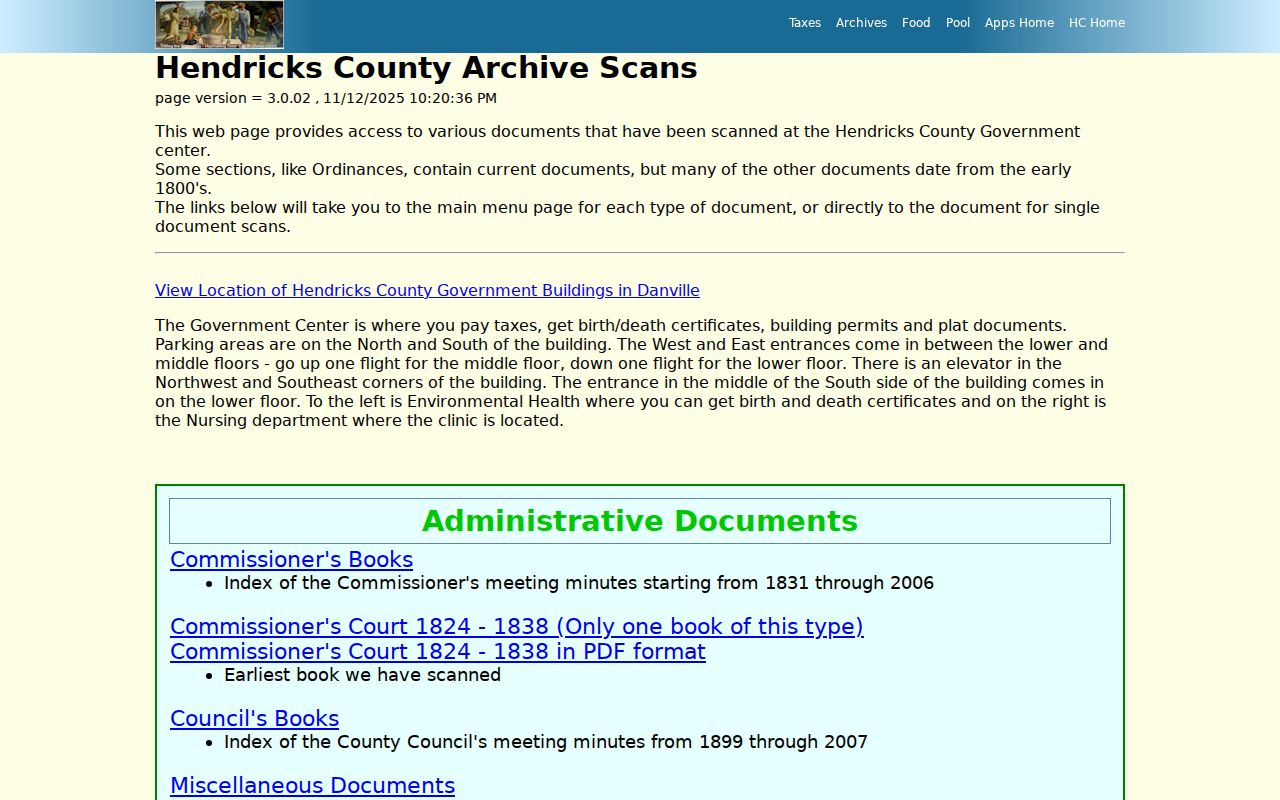
The menu shows why a failed name search is not the end of the trail. A transfer card, probate index, plat, or scanned Recorder book may sit behind a separate collection route.
Record the collection name, date range, page or image number, and whether you saw an index or the original instrument. Yellow and blue transfer cards are tax and transfer clues, not substitutes for deeds. The archive's marriage or probate entry can connect family members, but it does not prove that all of them shared the Brownsburg address.
Trace Hendricks Deeds Backward
A chain of title is the sequence of recorded ownership transfers for the same property. Start with the current parcel in XSoft Engage. Copy its parcel ID, owner, subdivision and lot, and exact legal description. The legal description is the stable land wording in a deed; it often survives when a street number or postal label changes.
- Search the current address or parcel in XSoft and save the current owner and legal description.
- Use the Recorder's Doxpop route to find that owner's purchase as grantee.
- Open the instrument details and confirm the same lot, subdivision, or legal description. Copy the seller, document number, date, and book/page.
- Search the seller as grantee to locate the seller's earlier purchase. Try spouses, estates, trustees, firms, and spelling variants when the deed calls for them.
- Repeat until online coverage ends, then move to county books, the archive, State Library microfilm, or the FamilySearch catalog.
- Grantor and grantee
- The grantor transfers the interest; the grantee receives it.
- Chain of title
- The linked run of deeds for the same parcel, checked transfer by transfer.
- Legal description
- The recorded land description, such as a lot and subdivision, used to match the parcel across time.
- Instrument
- A recorded document such as a deed, mortgage, release, plat, or easement.
Doxpop's provider statement puts Hendricks index and image coverage at January 1977 or later. Exact access terms and image availability can change. The Recorder supplies official or certified copies, while older research also reaches deed volumes and indexes through 1889. A deed proves a transfer, not continuous occupancy.
Brownsburg House History Method
The Plainfield Library house and property history guide offers a strong county method: combine deeds, census records, directories, marriage and obituary sources, maps, Sanborn material, and atlases. Its worked example is in Plainfield, so its people, dates, and address must not be copied as Brownsburg facts.
Review the house-history guide as a research checklist.
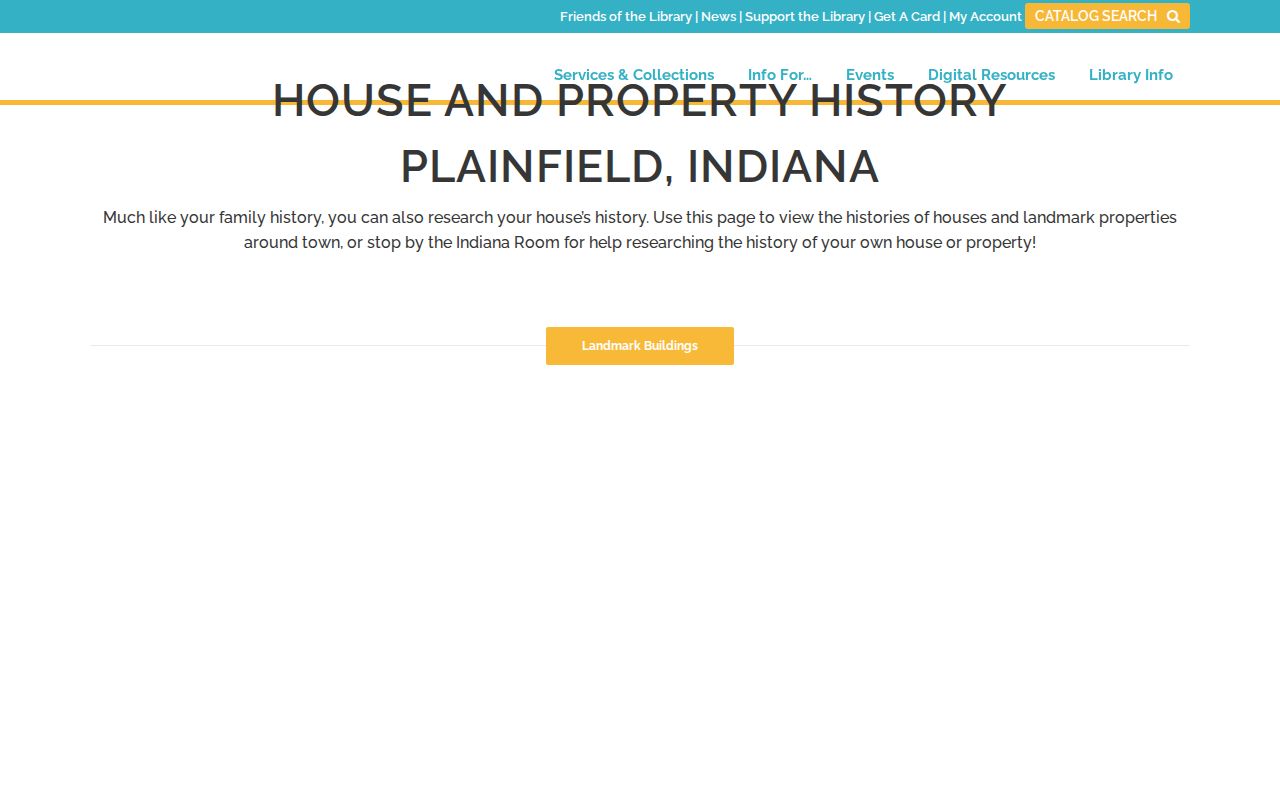
The guide shows how records with different purposes can be placed on one dated timeline without treating any one source as a master resident list.
A sample file demonstrates the method in practice. Its value is the citation pattern: deed, census, directory, marriage, obituary, map, and atlas details are preserved instead of blended into one unsupported story.
The sample house history shows that layered evidence.
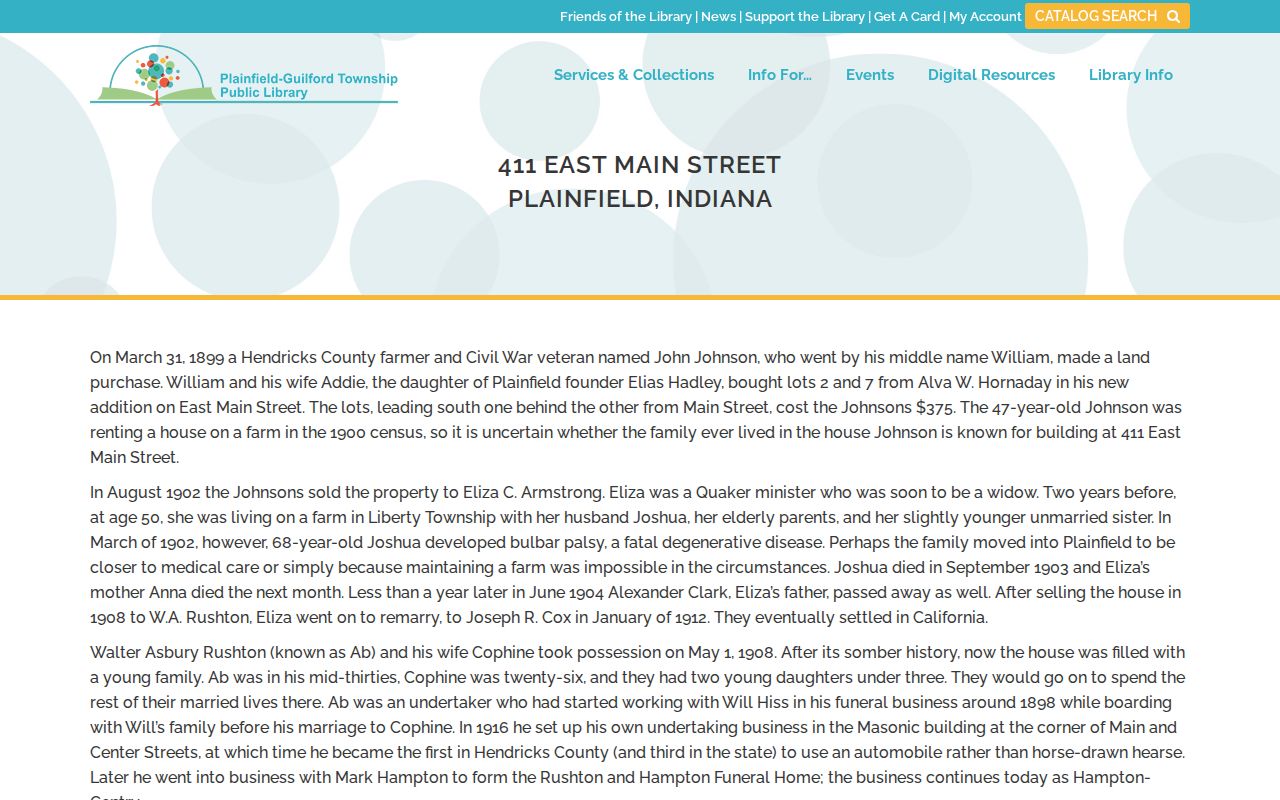
Use its structure, but replace every example fact with evidence from the actual Brownsburg parcel under study.
Map Brownsburg Previous Residents
Maps test whether an old address and a modern parcel refer to the same place. The Indiana Room lists maps, plat books, atlases, and Sanborn resources. The State Library lists Brownsburg maps from 1980 and 1984, plus owner-indexed county atlases. County plat access begins with an 1880 archive index and includes later dated holdings.
A Sanborn fire-insurance map can show a structure's footprint, material, number of stories, use, and nearby buildings. It usually does not name a household. Start with today's legal description, locate the historic lot or tract, then compare the dated map with a deed, census, or directory source. No verified Brownsburg-specific digital Sanborn run was located, so ask the Indiana Room or State Library about access rather than claiming online coverage.
No official Brownsburg street-renumbering schedule was found. Bridge a changed address through the parcel, plat, GIS, post office, library help, and Recorder description. Annexation can also shift the municipal label while the land stays put.
Note: A current Brownsburg mailing label may not match the town's corporate limit or the wording used in an early county record.
Brownsburg Address Labels Changed
Hendricks County was organized in 1824, while Brownsburg's early story includes incorporation in 1848, rail service in 1879, commuter service in 1910, and a major library milestone in 1917. These dates help explain why previous residents can surface under Brown Township, a village or post-office name, a railroad reference, Hendricks County, or the modern Town of Brownsburg.
The 1882-83 Polk Indiana gazetteer is one useful bridge into that era.
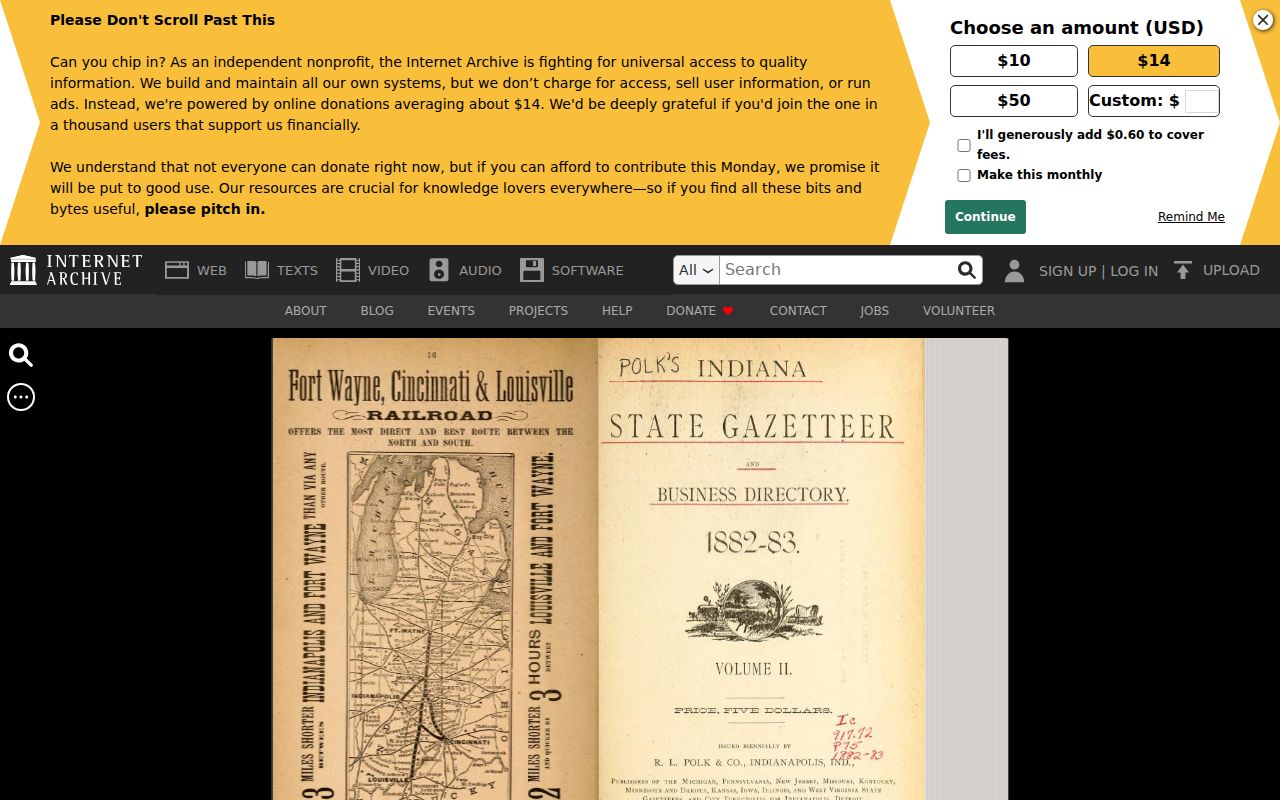
The volume provides dated names and town context, but it does not supply a complete address-by-address household list.
Search spelling variants and middle initials. Preserve the old place label exactly. A business name can differ from a person's name or from a later legal entity. Most important, do not project a current property owner back into the rail or village era. The map, plan, directory, and deed must each be read at their own date.
Brownsburg Past Household Evidence
Owners are only part of the answer. To identify previous residents, pair the deed trail with dated household sources. The public federal census is available through 1950 under the 72-year release rule. A census records one enumeration date. It may show household members and relationships, but the address format and place label need separate checking.
- Choose a proven owner and date from the deed chain.
- Search a directory, gazetteer, newspaper, or census close to that transfer date.
- Compare names, ages, relatives, roles, and place labels without forcing a match.
- Use the Brownsburg obituary and biography index or county probate books to test a death, heir, or estate transition.
- Log the last supported date and leave any gap open.
The historical collections themselves are described on the Brownsburg city directory page. That shelf may yield a true directory, newspaper, yearbook, or local file. The Indiana Room adds marriage, cemetery, military, naturalization, family, and obituary sources. Those records can confirm a family link, but they still need a dated address connection.
Lawful use. Research Brownsburg previous residents for family history, property history, estate questions, or personal curiosity. Never use a record trail to harass or track a living person.
Brownsburg Permit Record Gaps
Permits can date construction, additions, inspections, and certificates of occupancy. Brownsburg directs applicants through ViewPoint, but the research pass did not verify a public address index or historical coverage. Utility maps may show infrastructure, yet customer names should not be assumed public.
For an existing record, contact Development Services or use the town's public-record request route. Ask for a narrow address or parcel, a date range, and a defined record type. The Town GIS can also expose corporate limits, annexation, zoning, subdivision, flood, and district context. It does not prove who occupied the home.
A sound previous residents timeline labels every entry by source and date. Mark owner, occupant, applicant, relative, heir, or business role separately. Stop where the evidence stops. That restraint is what turns a pile of name matches into a useful Brownsburg address history.